

Mortgage Document Checklist
Applying for a mortgage doesn’t have to be complicated.
We’ll walk you through the documents you may need and help you understand each step along the way.
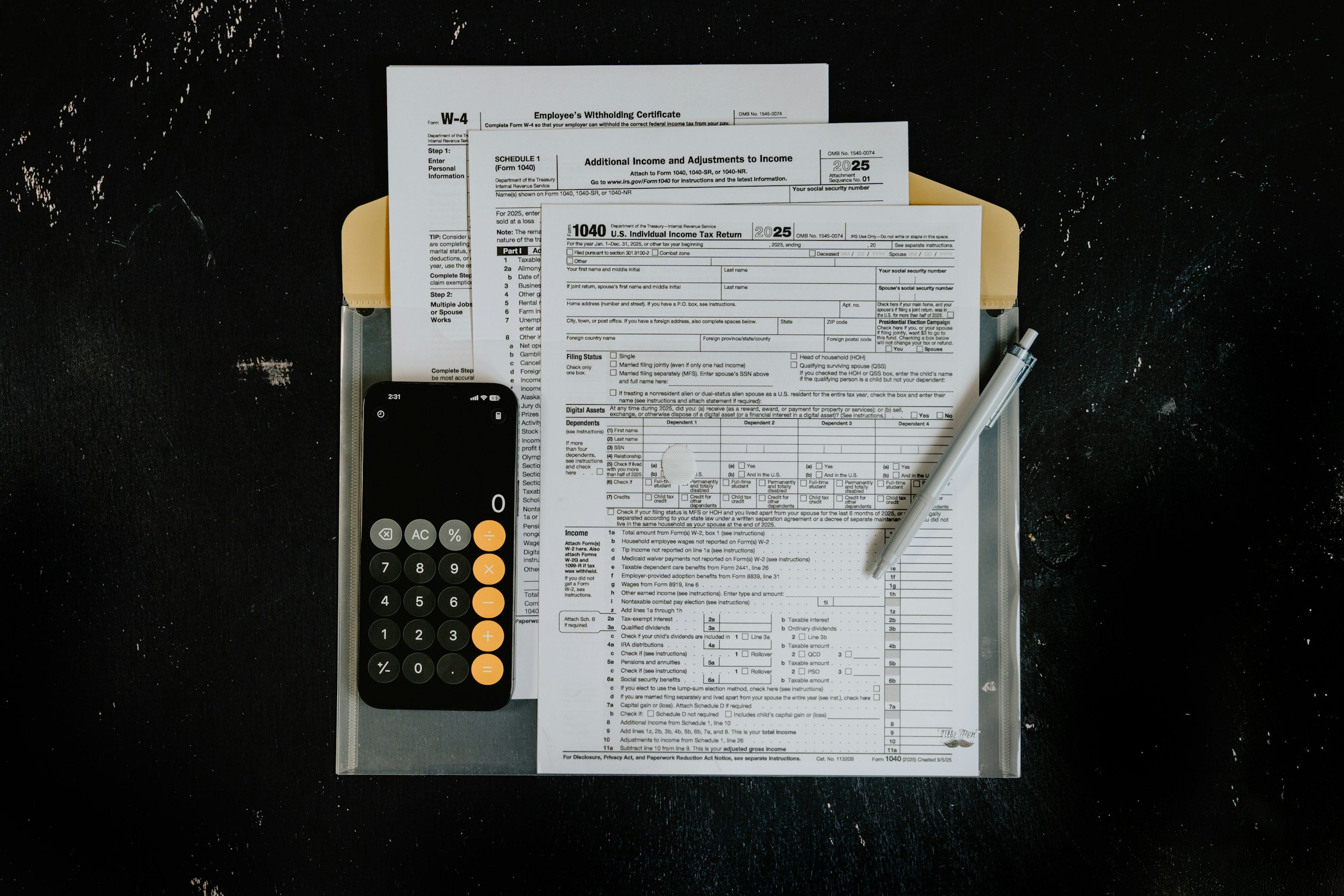
How We Evaluate Your Profile
Before approving a mortgage, we review a few key factors to understand your financial situation, including income, credit, assets, and overall stability.
Every situation is unique, and understanding yours allows us to match you with the most suitable loan programs.
Having your documentation ready from the start helps streamline the process and ensures a more accurate qualification.
Personal Identification
We verify your identity and ensure your documents are valid and up to date. This is a standard part of the mortgage process and allows us to move forward with your application securely and efficiently.
-
A clear copy of a valid, government-issued photo ID such as a driver’s license or state ID.
👉 This helps us confirm your identity and match your information with your application.
Important:
Your ID must be valid and clearly legible. Temporary IDs may be accepted as long as they are not expired.Where to get it:
Typically issued by the Department of Motor Vehicles (DMV) in your state. -
Documents that confirm your legal status and authorization to live and/or work in the United States.
👉 This helps ensure you meet the eligibility requirements for certain loan programs.
Accepted documents may include:
Employment Authorization Document (EAD)
Permanent Resident Card (Green Card)
Valid visa (depending on the loan program)
Important:
If you are a U.S. citizen, this section does not apply, and no additional documentation is required here.Where to get it:
These documents are issued by U.S. Citizenship and Immigration Services (USCIS) and can be requested or renewed through their official website. -
We will need to verify your Social Security Number, either through a copy of your Social Security card or, in some cases, just the number itself.
👉 This is used to verify your identity and access your credit profile during the process.
-
Depending on your situation, additional documents may be used to support your application:
Passport
ITIN (Individual Taxpayer Identification Number)
Visa documentation
Other government-issued identification
👉 These documents may be required in specific scenarios, such as ITIN loans or non-traditional applications.
We review your income to understand how much you earn on a consistent monthly basis. This allows us to determine what you can comfortably afford without putting your financial stability at risk. We also use this information to calculate your DTI (Debt-to-Income ratio), a key factor in determining your loan amount. In most cases, lenders prefer that your total monthly debts stay within a reasonable percentage of your income.
Income & Employment
-
A W-2 is a tax form provided by your employer at the beginning of each year, showing how much you earned the previous year.
👉 This helps us verify your employment history and income consistency.
Where to get it:
Your employer
Payroll portal (ADP, Paychex, etc.)
Your tax preparer
Included in your tax returns
-
We typically request your most recent pay stubs to verify how your income is structured — whether hourly or salaried — and to confirm consistency in your earnings.
This allows us to accurately calculate your qualifying monthly income, which plays a key role in determining how much you may be eligible to borrow.
Where to get them:
Through your employer
From your payroll portal (ADP, Paychex, etc.)
If you work for a company ⬇️
If you are self-employed or own a business ⬇️
-
e require complete copies of your personal tax returns (Form 1040) for the past two years.
👉 These are used to verify your annual income, especially if you are self-employed or have multiple income sources.
Important:
The income reported here plays a major role in determining how much you qualify for.Where to get them:
From your accountant, tax preparer, tax software (TurboTax, etc.), or Internal Revenue Service (IRS). -
Recent statements from your personal bank accounts (checking or savings), typically covering the last 2 months.
👉 These help verify available funds and ensure your financial activity is consistent and documentable.
Important:
Statements must include all pages and show your name, account number (partial is fine), and full transaction history.Where to get them:
Download from your bank’s website or app, or request them from your bank branch. -
If you are self-employed or own a business, we take a more detailed look at your financials to confirm income stability.
👉 Unlike traditional employment, we evaluate both your personal and business finances.
Documents may include:
Personal tax returns (last 2 years)
Business tax returns (last 2 years, if applicable)
Business bank statements (last 2 months, if separate)
(Your personal bank statements are also considered)
👉 Tax returns help us understand your reported income, while bank statements help us evaluate cash flow and business activity.
Important:
If your business income is reported under your personal taxes (such as a Schedule C), separate business tax returns may not be required.
If you maintain separate business accounts, including them is essential for accurate evaluation.👉 In some cases, we may also request additional documents such as a Profit & Loss statement (P&L) or proof that your business is active.
Assets & Credit
We review your bank statements and assets to confirm you have the funds needed for your home purchase, including your down payment and closing costs. We also evaluate your credit profile to understand how you’ve managed your financial obligations over time. It’s not just about your score — we look at your full credit history, including payments, balances, and overall account activity.
Even if your credit isn’t perfect, there are still options available, and we’re here to guide you through them.
-
Recent statements from your personal bank accounts (checking or savings), typically covering the last 2 months.
👉 These help us verify your available funds and ensure your financial activity is consistent and properly documented.
Important:
Statements must include all pages and clearly show your name, account number (partial is fine), and full transaction history.Where to get them:
Download them from your bank’s website or mobile app, or request them directly from your bank. -
These may include accounts such as 401(k), IRA, stocks, or other investment accounts.
👉 These can be used to demonstrate additional reserves or available funds that may support your loan application.
Important:
You may not need to use these funds, but they can help strengthen your financial profile or cover part of your closing costs if needed.Where to get them:
You can download statements from your provider (Fidelity, Vanguard, etc.) or request them from your financial advisor. -
If a family member or close relative is helping you with part of your home purchase (such as the down payment or closing costs), these funds can be used.
👉 Many buyers are not aware of this, but it’s a common and accepted practice in many loan programs.
How it works:
The funds must be documented as a gift, not a loan — meaning you are not expected to repay them.What’s required:
A signed gift letter
The name of the person providing the funds
Confirmation that the funds do not need to be repaid
Important:
In some cases, we may also need to verify the source of the funds (for example, a bank statement from the donor).
Credit Report ⬇️
-
Your credit score is a number that reflects your overall financial behavior based on how you manage your debts.
👉 It plays a role in:
Loan eligibility
Interest rate
Available loan programs
Important:
A higher score typically leads to better terms, but there are still options available even if your credit is not perfect. -
Your credit report provides a detailed view of your financial history and current obligations.
👉 We review more than just your score, including:
Payment history (on-time or late payments)
Credit card balances
Open credit lines
Collections or negative accounts
👉 This information is also used to calculate your DTI (Debt-to-Income ratio), which helps determine how much you can realistically afford.
Important:
You don’t need to provide your credit report directly — we will obtain it with your authorization.👉 However, it’s a great idea to review your credit ahead of time using tools like Credit Karma or your bank’s app to check for errors or discrepancies before applying.
Additional Documents
Every situation is unique, which means we may need additional documentation to fully understand your financial profile and move forward with your approval. For example, if you own other properties, receive additional income, or have certain financial obligations, it’s important to document them properly.
Not all of these documents apply to everyone, we’ll guide you based on your specific situation.
-
If you receive income beyond your primary job, it’s important to document it so it can be included in your qualification.
👉 This may help increase your purchasing power.
Common examples include:
Rental income
Bonuses or commissions
Social Security income
Investment income
Important:
These income sources must be consistent and verifiable in order to be considered. -
If you receive or pay child support or alimony, we’ll need to document it properly, as it may impact your financial profile.
👉 It can either be counted as income or as a monthly obligation.
Documents may include:
Court order or legal agreement
Payment history (if applicable)
-
If you currently own other properties, we’ll need this information to evaluate your existing obligations.
👉 This helps us understand your current payments and how they affect your purchasing power.
Documents may include:
Property address
Mortgage statement
Insurance policy
-
If you are currently renting, your rental history helps us understand how you manage monthly housing payments.
👉 This can be a positive factor, showing consistency and responsibility.
Documents may include:
Lease agreement
Payment history (bank statements, canceled checks, or landlord verification)
Important Tips Before Applying
✅ What To Do
Keep your bank accounts stable
Save for your down payment and closing costs
Gather your documents early
Inform us of any changes in employment or income
Make all payments on time
Reach out before making major financial decisions
❌ What To Avoid
Don’t change jobs without consulting first
Don’t open new lines of credit
Don’t make large purchases (cars, furniture, etc.)
Don’t move money without proper documentation
Don’t ignore calls, emails, or messages from your loan team
Don’t sign contracts without reviewing them with us
-
No, you don’t need to have everything ready to begin.
Most clients start with a few basic documents, and we guide them step by step through the rest. Our goal is to make the process simple and manageable, not overwhelming.
-
This depends on the loan program and your financial profile.
Some programs allow for a low down payment, and in certain cases, closing costs can be partially covered by the seller or assistance programs. We’ll help you understand what to expect based on your situation.
-
There isn’t a one-size-fits-all answer.
Different loan programs have different requirements, and options are often available even if your credit isn’t perfect. More important than the score alone is your overall credit history and how you’ve managed your accounts.
-
Yes, in many cases you can.
Many buyers receive financial help from family members. The funds simply need to be documented properly as a gift, not a loan. We’ll guide you through exactly how to do this.
-
Absolutely.
We’ll just need to review additional documentation, such as your tax returns and possibly business records, to verify your income. Each situation is evaluated individually.
-
Yes, there are loan programs designed specifically for ITIN borrowers.
Requirements may vary depending on the program, but we can walk you through your options and help you determine what’s available to you.
-
That doesn’t automatically disqualify you.
In many cases, we can help you understand your current position and identify steps you can take to improve your profile. Sometimes small adjustments can make a big difference.
-
It’s best to avoid large or unusual transfers unless they can be clearly documented.
If you’re planning to move funds, it’s always a good idea to check with us first so we can guide you and prevent delays.
-
We understand it can feel like a lot.
Each document serves a purpose — to verify your information and ensure that the loan you receive truly fits your financial situation. This helps protect you and avoid issues later in the process.
-
Timelines can vary, but most loans take a few weeks once all documentation has been submitted.
Providing documents quickly and staying responsive can help keep everything moving smoothly.
-
We make it easy and flexible.
You can send documents through email, secure upload links, or even by text message, depending on what works best for you. We’ll guide you on the best method.